Monday, 20 October 2014

Invisible cities: Colour scheme and Composition


After creating the last colour comp I felt like the green wasn't really working in my city and instead tried to make a new palette. I've gone for a mix of Blue, Yellow and Red though I may add some subtle orange tones to help balance the blue out. 


I changed the colours of my previous colour comp and they seem to fit a little better this time though obviously it still need refining. 


I took that colour comp, sketched ontop of it roughly and started adding perspective, I think it's looking okay so far though I might scale the buildings down a little.


I also made an interior colour comp, 3 is my favourite though I need to add more to it. 


Share:

Sunday, 19 October 2014

Invisible cities: Interior thumbnails 1-9 and Transport thumbnails


Here I created some thumbnails for interiors in Ersilia. I wanted to either do a station or a shopping centre. After sketching them out I prefer the idea of a shopping centre, I like 4 and 6.

I also sketched out what some of the transport might look like. I'm thinking of including some in my low angle shot.

Share:

Friday, 17 October 2014

Invisible cities: Buildings and Establishing Shot Composition


 Here are some building designs that I considered for Ersilia. I tried out some unusual shapes to create some buildings that would fit with my idea for the city. 


I was struggling in terms of composition for Ersilia, I had a rough idea of where I wanted everything to be placed but I still wasn't sure. So to help me envision the city I created a birds eye view of it. On the right of the image is the city itself, the thick lines represent streets and the squares represent where a important building or space might go. I tried to lay it out like a circuit board. To the side are the mountains and the posts which are mentioned in the text.


Keeping these ideas in mind I planned out a rough composition for my establishing exterior shot. I kept the rule of thirds in mind and kept the mountains in the top third and the city central and to the right of the shot. This is only a rough sketch at the moment I plan to add more buildings and finalise it soon.

Next I'm planning on sketching out modes of transport and working on interiors, I'm possibly thinking of the interior shot being inside the station or shopping center. 

Share:

Wednesday, 15 October 2014

Invisible cities: Developed Exterior thumbnails 10-13 and Perspective exercises


Here I took my developed thumbnails and combined them into one to try and build somewhat of a bigger city. I think this is starting to create the mood of my city however it's not all the way there yet. I'm struggling in terms of buildings ideas so I'm going to draw some different types of buildings to help fill some of those spaces. I'm also going to give more consideration to the transport of the city. 


I'm struggling a little with perspective so I tried out some perspective exercises. I've done one and two point perspective.


Share:

Merian C. Cooper and Ernest B. Schoedsack's King Kong (1933)


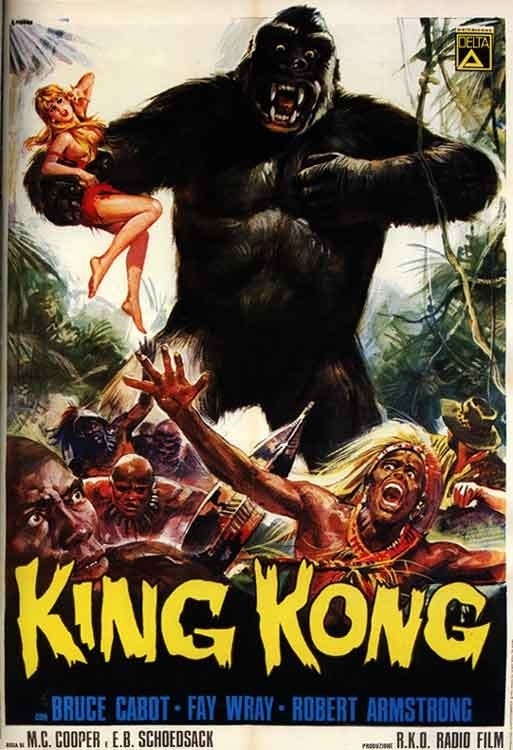
Fig1. King Kong Poster

King Kong is a movie of action, set on an island of prehistoric monsters including a huge ape named Kong. Carl Denham, a filmmaker wants to film the island and hopes to find something spectacular and film it. He takes a young girl named Ann with him to be the lead in his film however when they get onto the island the natives ask for her to be the sacrifice for Kong. They refuse and leave but the natives kidnap Ann and Kong takes her further into the island.

Fig 2. Jungle Set
The sets of the island are particularly impressive. Each set is realistic and particularly in the forest scenes the illusion of a deep forest is given. A realistic set is pretty important to this film because they were creating creatures that weren’t real but because of its realistic sets the audience can relate better to the film.

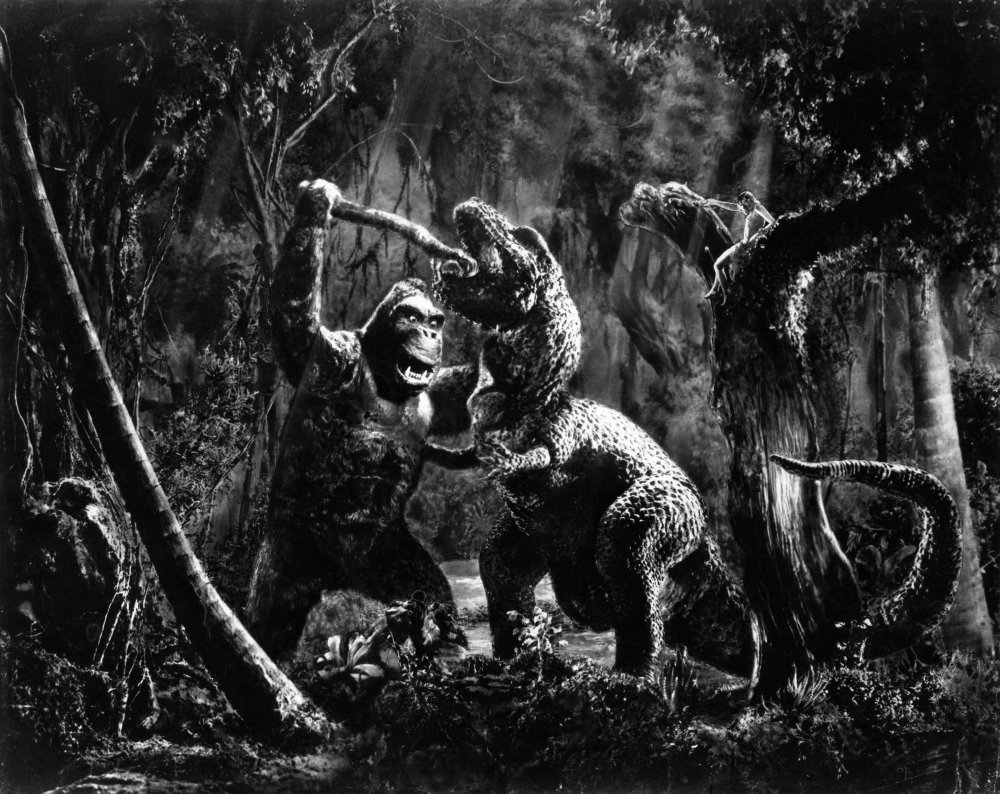
Fig 3. Kong Fighting
King Kong is notable for the way Kong is made and J, Anderson says that “Technicians made the giant ape from a combination of oversize body parts, small models and stop-motion animation.” (Anderson, J). At the time this technique of making Kong would have astounded the audience and they certainly would have been thrilled by the fighting scenes which were probably thought to have been impossible before. Though as E, Levy notes in his review “By today’s standards, the film’s special effects look primitive, but “King Kong” was the first film to pioneer the basic machinery and techniques that modern filmmakers, such as Spielberg and Jackson, later refined with the help of electronics and computers.” (Levy, 2011). It’s important to note that without the special effects in King Kong many modern films we love today wouldn't have been made.

Fig 4. Ann and the Natives

Though King Kong is celebrated for its use of set and special effects it is often criticised for its portrayal of the natives and the character Ann. Smith states in his review that “Beyond its pure escapist value, Kong has been interpreted as a symbol for persecuted blacks and seen as a metaphor for man's destruction of the environment, natural order and other things.” (Smith, 1991). One interpretation is that Kong is a metaphor for the slaves that were taken to America, on the island he is a king and is free however in America he is treated badly and is there to be a slave for their entertainment. The natives are also presented in a racist way showing them to be uncivilised and of lesser people, there culture is in no way respected by the crew. Ann, the only lady of the crew, is also disrespected. Jack who clearly finds her attractive treats her badly saying that she has no place among them. Later Jack tells her that he loves her and they kiss- it clearly shows the primitive thinking of men being able to do what they like to a woman and for them to still get the girl like she’s some sort of prize. This film shows Ann to be helpless and she has to be saved every time, this sexist portrayal will surely have you rolling your eyes.

However though this film is quite clearly sexist and racist I don’t think it should be forgotten about, it’s important to remember that this is how people thought back in the 1930’s and denying yourself of acknowledging it’s existence is also like denying that we didn't have these problems in society at all.

Illustration List 

Cooper, M/ Schoedsack, E (1933) Figure 4 Ann and the Natives http://www.movpins.com/big/MV5BMjIzMDcyNTEzMl5BMl5BanBnXkFtZTcwNTQ4OTUwNA/still-of-fay-wray-in-king-kong-(1933).jpg (Accessed on the 12/10/14)

Bibliography

Anderson, J (2005) http://www.combustiblecelluloid.com/classic/kingkong.shtml (Accessed on the 12/10/14)
Smith, M (1991) http://articles.latimes.com/1991-10-24/news/ol-253_1_king-kong (Accessed on the 12/10/14)


Share: